Laser Forge
A workbench for generative vector motifs. A base generator produces polylines in millimetres, which optionally run through an arbitrarily long pipeline of distortion layers. What comes out is an SVG, and that goes straight into a pen plotter or a laser.
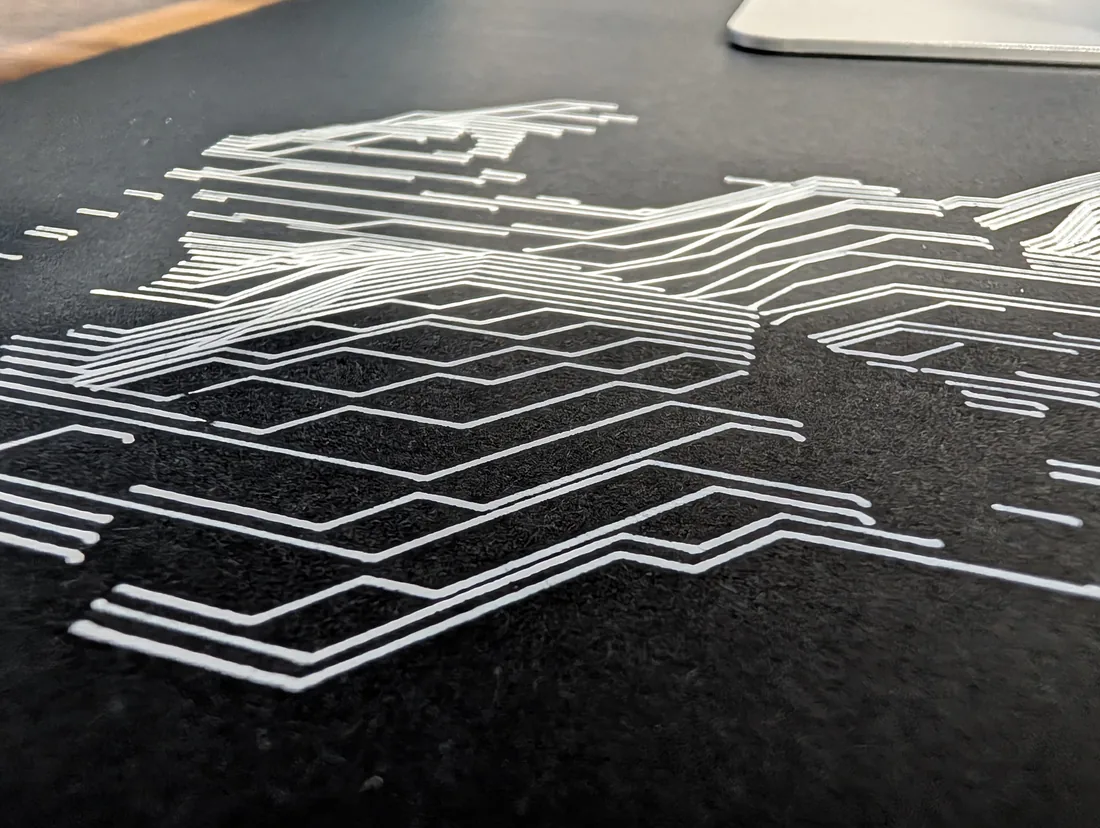
Two properties that make the difference
Seed-deterministic: same seed, same result. In generative work that is not a detail – without determinism you cannot find your way back to a motif that worked.
Shareable via the URL hash: the entire state sits in the address. Passing a motif on means sending a link, not a file.
What's in it
Around fifteen base generators, from flow fields through harmonographs, spirographs, superformula, Truchet tiles, strange attractors and Voronoi cells to L-systems and differential growth. Plus TSP art, which turns an image into one continuous line via weighted stippling, and space-filling curves – Hilbert, Moore, Gosper, Sierpiński – drawn in a single stroke.
Seven distortions sit behind that, from noise warp to Chaikin smoothing. The authoritative list lives in the registry in code, not in the documentation – otherwise the two drift apart.
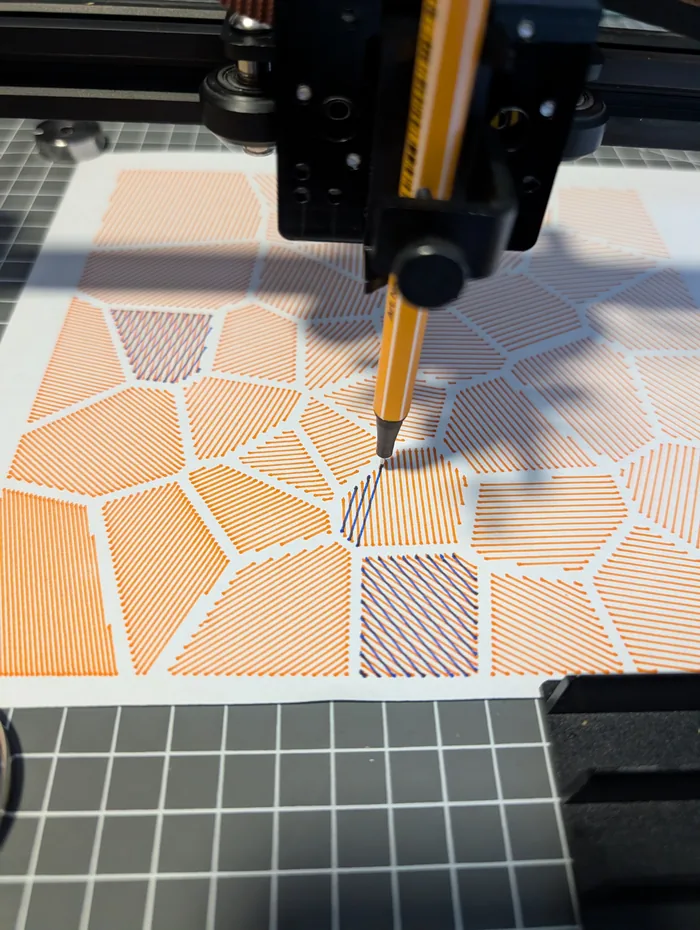
The path doesn't end in the browser: a bridge on a Raspberry Pi is wired straight to the machine and takes the G-code.
Status
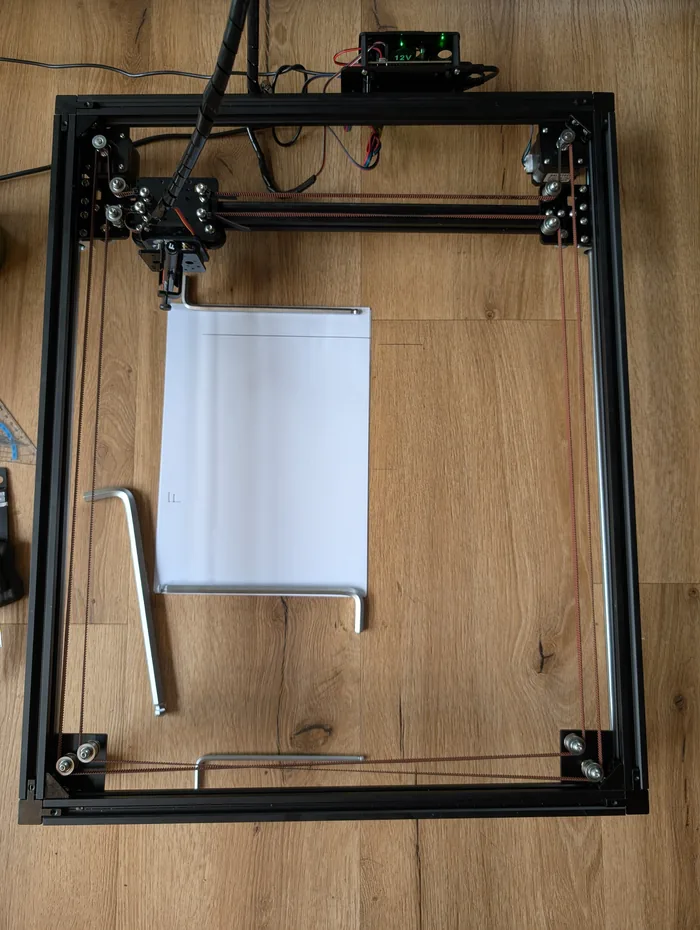
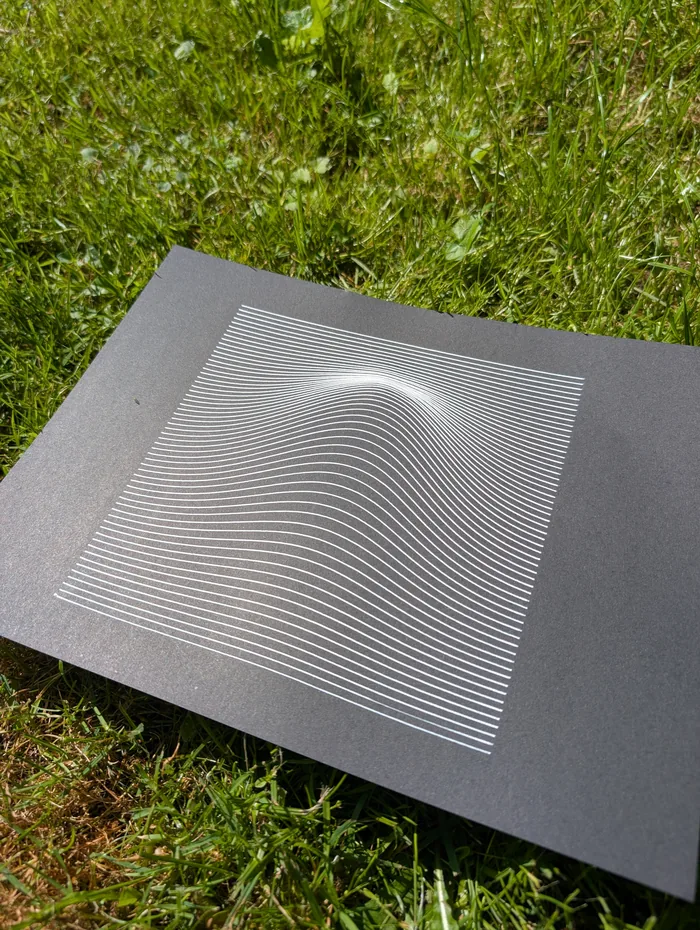
Runs locally: the interface in the browser, the bridge on a Raspberry Pi wired straight to the machine. Not publicly reachable – it's a workshop tool, not a product. The motifs that come out of it are the starting point for SPECIMEN PRESS.